The Bride's True Message: Jessie Buckley as Mary Shelley Unveiled
In the realm of cinema, some films defy easy categorization, blending genres and challenging perceptions to deliver a truly singular experience. Such is the case with "The Bride," a cinematic marvel that fuses horror, arthouse sensibilities, and a profound literary homage into an explosive message movie. At its heart lies a powerful narrative about a woman seizing agency, brilliantly brought to life by Jessie Buckley, whose performance unravels the layers of The Bride, an escort named Ida, and even the formidable spirit of Mary Shelley herself. To truly grasp the film's innovative storytelling and its resonating themes, we must dive deep into what makes
The Bride Explained such a compelling and enduring work.
Unveiling the Layers: Jessie Buckley's Portrayal of The Bride and Mary Shelley
Jessie Buckley's role in "The Bride" is nothing short of masterful, a transformative portrayal that forms the very backbone of the film's intricate narrative. She embodies not just one character, but a multi-faceted entity grappling with existence, identity, and profound defiance. From the outset, the film establishes a compelling premise: we meet Mary Shelley, the legendary author of *Frankenstein*, in a stark, intimate scene. Shelley, portrayed by Buckley, confesses her inability to fully express her truths within the confines of her novel or society. This monologue serves as a profound opening, suggesting that The Bride's journey will be a vehicle for Shelley's unarticulated insights and frustrations.
This concept manifests as Shelley's spirit seemingly possesses Ida, a young escort also played by Buckley. This layered performance elevates the film beyond a mere monster tale; it becomes a meta-commentary on creation, authorship, and female voice. Buckley navigates these identities with breathtaking skill, seamlessly shifting between Ida's vulnerability, The Bride's burgeoning rage and confusion, and the underlying intellectual fire of Mary Shelley. This amalgamation allows the film to explore themes of control, self-discovery, and societal expectations through a uniquely historical and contemporary lens. It's through this masterful act of embodiment that the film offers a fresh perspective on the iconic Frankenstein narrative, making
The Bride Explained not just a story, but an experience of embodied history and defiant selfhood.
A Wild Ride: Deconstructing The Bride's Explosive Plot and Themes
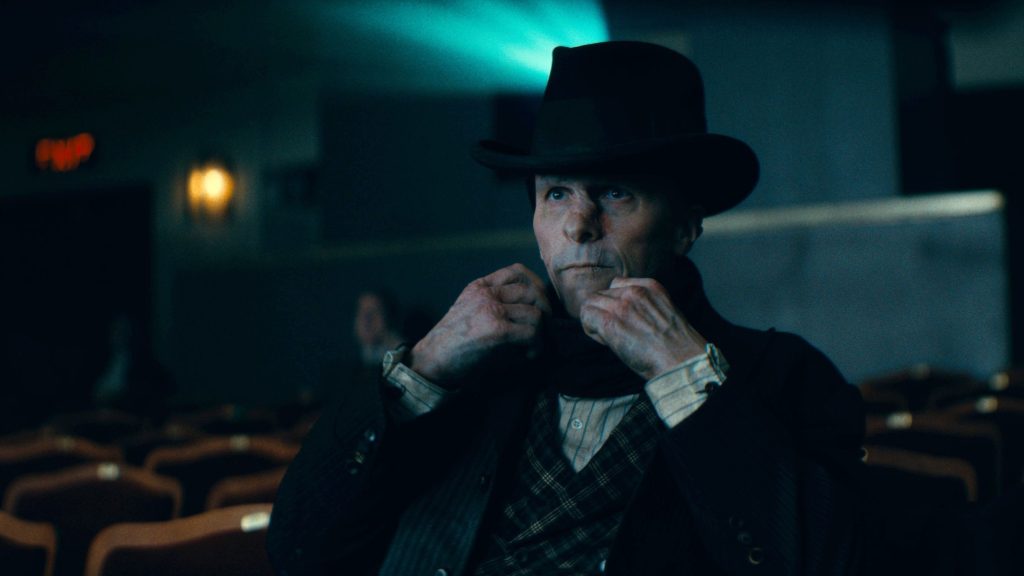
"The Bride" throws its audience into a whirlwind narrative, beginning with an aged and solitary Frankenstein, who, after 111 years alone, seeks a companion. His journey leads him to the eccentric Dr. Euphronious, a creator who can breathe life into the inanimate. The origins of The Bride are rooted in stark reality – a body exhumed from a pauper's grave, signifying her initial lack of identity and societal standing. Her resurrection, however, ignites a chain of events that pushes her far beyond her intended role as a mere companion.
What follows is a chaotic, almost "Bonnie and Clyde"-esque odyssey. The duo becomes wanted for murder, first when Frankenstein kills two men attempting to assault The Bride, then when The Bride herself acts in fierce self-defense against a police officer, leading to a relentless manhunt. These violent encounters are pivotal; they are not just plot points but moments where The Bride's nascent agency sparks to life. She is forced to confront brutality, to defend herself, and in doing so, begins to define herself outside the confines of a 'creation' or a 'companion'.
A crucial turning point arrives when Frankenstein proposes marriage. Her rejection, however, is met not with anger but with his "intense pleasure" – a bizarre reversal that highlights the unconventional nature of their bond and challenges traditional romantic ideals. It suggests a deeper connection rooted in shared monstrosity and defiance of norms, rather than societal expectation. Yet, this defiance is tragically cut short when Frankenstein is shot and killed by the police.
In a desperate, heart-wrenching twist, The Bride returns Frankenstein's body to Dr. Euphronious, pleading for his resurrection. But the doctor declares it impossible. As the detective hot on their trail, Det. Mallow (played by Penélope Cruz), arrives, The Bride is brutally gunned down in a hail of gunfire, seemingly perishing alongside her companion. This series of events, brutal and unyielding, strips away any pretense of a traditional happy ending, forcing viewers to grapple with the raw, uncompromising message of the film: a woman taking control of her life, even when the world violently tries to force her into a specific, subjugated role. This narrative arc is central to understanding
The Bride Explained as a powerful commentary on autonomy.
The Ambiguous Echo: Did They Really Survive?
The climax of "The Bride" leaves audiences in a state of tantalizing ambiguity, a signature move for a film that embraces arthouse sensibilities. Following the gruesome deaths of both Frankenstein and The Bride, their bodies lie seemingly lifeless together. Yet, the film isn't content to simply conclude their story. Det. Mallow, observing the scene, orders the police to leave Dr. Euphronious and her maid to prepare for questioning. However, Mallow clearly anticipates something more. As the police depart, she looks back at the house, a boom echoes, and the lab's lights begin to flash erratically. The camera then cuts to a chilling and hopeful image: The Bride's hand moves, then Frankenstein's, and they grasp each other as the credits roll.
This final moment is open to myriad interpretations, a deliberate choice that fuels much of the discussion surrounding the film. While the heavy police presence outside makes a conventional escape seem impossible, the grasping hands suggest a continuation, a rebirth, or perhaps even an eternal cycle of their existence. Director Maggie Gyllenhaal has referred to this as a "hopeful ending," but what kind of hope is it?
It could signify:
*
A Spiritual Rebirth: Even if their physical forms are contained, their spirits, their essence, or their defiant connection lives on.
*
A Cyclical Narrative: The monsters are destined to return, perhaps in a continuous loop of creation, defiance, and destruction, forever challenging societal norms.
*
The Power of Connection: Their intertwined hands symbolize that even in the face of overwhelming odds and apparent death, their bond, forged in chaos and self-discovery, persists.
This ambiguity is precisely why the film resonates so deeply. It doesn't offer easy answers, instead inviting viewers to ponder the nature of life, death, identity, and the enduring power of a woman's will. For a deeper dive into the nuances of this impactful finale, you might explore
The Bride Ending Explained: Unpacking Its Hopeful But Ambiguous Twist. And if you're still wondering about their ultimate fate, the article
Did The Bride and Frankenstein Really Survive Their Explosive End? provides further discussion. Ultimately, the ending solidifies the message of
The Bride Explained: the spirit of rebellion and self-determination, once awakened, is incredibly difficult to extinguish.
In conclusion, "The Bride" is far more than a genre-bending cinematic experiment; it is a profound exploration of identity, agency, and the enduring power of the female voice. Jessie Buckley's multi-layered performance as The Bride, Ida, and the resonating spirit of Mary Shelley anchors a narrative that is at once thrilling, brutal, and deeply thought-provoking. The film's audacious plot, culminating in an ambiguously hopeful ending, challenges viewers to look beyond conventional narratives and embrace the complexity of self-determination. By seamlessly weaving together homages to literary classics with a modern, explosive message, "The Bride" stands as a testament to the idea that even in the face of creation and destruction, a true message of freedom can emerge, forever leaving its mark on those who dare to witness it.