Unraveling the Explosive Finale: Did The Bride and Frankenstein Truly Survive?
The silver screen has always held a special place for tales of creation and monstrous love, but few have tackled it with the subversive flair of a film like *The Bride*. Blending horror with an arthouse sensibility and a profound feminist message, this cinematic gem leaves audiences grappling with an ending as explosive as it is ambiguous. The central question reverberating long after the credits roll is: did its titular characters, The Bride and Frankenstein's monster, truly survive their fiery demise? Let's delve deep into the finale to unpack what really happened and what it signifies.
The film's climactic sequence sees Frankenstein's monster, affectionately known as Frankie, shot down by the police after The Bride rejects his marriage proposal – a pivotal moment of self-assertion for her. Desperate, The Bride drives Frankie's body back to Dr. Euphronious, pleading for another resurrection, only to be told it's impossible. As Detective Mallow arrives, the scene quickly escalates. In a tragic turn, The Bride herself is gunned down in a hail of bullets, collapsing beside her fallen companion. Both lie seemingly dead, their tumultuous journey seemingly concluded in a blood-soaked tragedy.
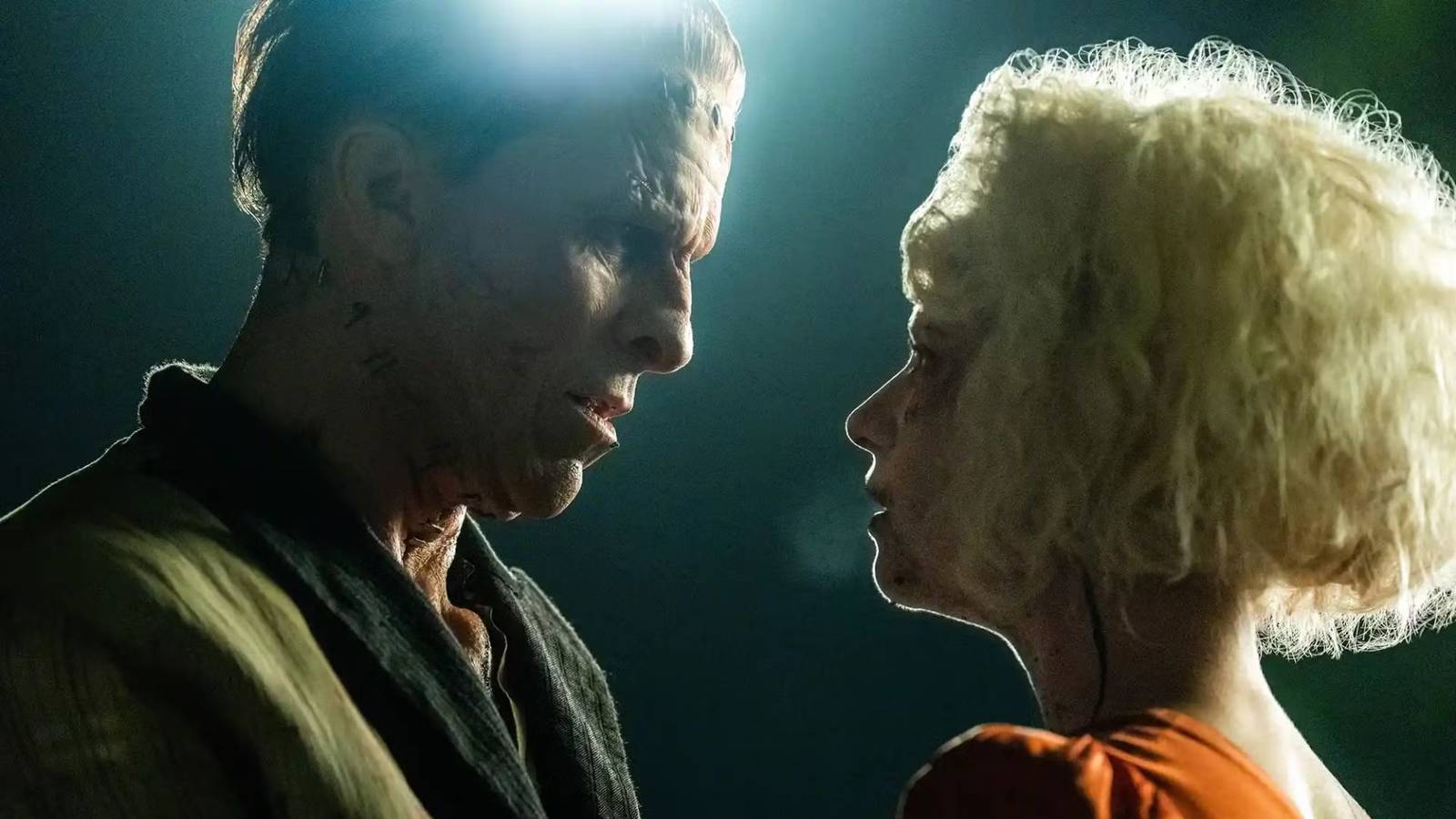
However, the film's true genius lies in its refusal to offer a neat resolution. After the police exit the lab at Detective Mallow's command, a pregnant silence hangs in the air. Mallow, watching from outside, hears a distinct boom, followed by the erratic flashing of the lab's lights. Inside, amidst the wreckage, a flicker of life emerges: The Bride's hand stirs, then Frankie's. Their hands reach out, grasping each other in a final, poignant embrace as the screen fades to black. This leaves viewers in a tantalizing limbo. On one hand, the immediate aftermath suggests a rebirth, a second chance for the titular characters. On the other, the overwhelming police presence outside makes any literal escape highly improbable. Director Maggie Gyllenhaal herself described it as a "hopeful ending," implying that while their physical survival might be uncertain, something more profound endures. This powerful ambiguity serves to amplify the film's core themes, inviting viewers to ponder the nature of survival, transformation, and freedom beyond literal life and death. For a more detailed look into this hopeful twist, explore
The Bride Ending Explained: Unpacking Its Hopeful But Ambiguous Twist.
Beyond the Grave: The Bride's Journey of Self-Discovery and Empowerment
At its heart, *The Bride Explained* is a meticulously crafted message movie about a woman's battle for autonomy against a world determined to define her. The character arc of The Bride, masterfully portrayed by Jessie Buckley, transcends the traditional monster narrative, evolving into a powerful exploration of self-liberation. She begins her existence as a resurrected corpse, dug from a pauper's grave, intended merely as a companion for Frankenstein. From the outset, her role is prescribed, her identity dictated by the desires of others.
Yet, from these inauspicious beginnings, The Bride embarks on a tumultuous journey. Early on, she's thrust into a "Bonnie and Clyde"-style existence alongside Frankie, wanted for murder after he kills two men attempting to assault her, and she later kills a police officer in self-defense. These violent acts, while born of necessity, are part of her brutal awakening to a world that simultaneously fears and seeks to control her. The true turning point arrives when Frankie, seemingly out of love, proposes marriage. Her rejection, much to his "intense pleasure" (a darkly comedic detail that underscores his own broken understanding of connection), is a defiant act of reclaiming her selfhood. She refuses to be merely a "wife," an extension of another's identity. This rejection is not an act of cruelty but a monumental assertion of agency, a declaration that she will define her own purpose, on her own terms.
Even her death at the hands of the police, brutal and seemingly final, cannot extinguish this newfound spirit. The film suggests that her survival is not just about physical resurrection, but the indomitable spirit of a woman who has finally found her voice. Her grasping hand with Frankie in the film's final shot could symbolize not a return to their previous dynamic, but a partnership redefined by her empowerment, or perhaps simply the enduring connection of two outsiders who have experienced a shared awakening. The film brilliantly uses the fantastical horror setting to illustrate a deeply human struggle for identity and freedom, making The Bride a truly resonant figure for modern audiences.
The Ghost of Mary Shelley: Unpacking Jessie Buckley's Dual Role
One of the most compelling and innovative layers of *The Bride Explained* is the interwoven narrative of Mary Shelley, the iconic author of *Frankenstein*. Jessie Buckley's phenomenal performance doesn't just encompass the newly resurrected Bride; she also embodies Mary Shelley herself, particularly in the film's striking opening. In a starkly lit scene, Shelley directly addresses the audience, expressing a profound truth: she couldn't fully articulate everything she wanted to say in her novel, nor in her own life, but now, through this story, she can speak her truth.
This meta-narrative suggests that Shelley's unexpressed desires and feminist frustrations manifest through The Bride. The film posits that Shelley's spirit possesses Ida, a young escort whose dead body is later resurrected as The Bride. This narrative device elevates the film beyond a simple horror homage, transforming it into a powerful commentary on authorship, creation, and the enduring struggle for women to control their own narratives. Through The Bride, Shelley gets to rewrite her own story, giving her female creation the agency and voice that society (and perhaps the constraints of her own time) denied her.
Buckley's portrayal is masterful, seamlessly blending the raw vulnerability of a newly created being with the deep-seated wisdom and defiant spirit of Shelley. Every choice The Bride makes—from her violent acts of self-preservation to her ultimate rejection of Frankie's proposal—can be seen as Shelley speaking through her, asserting the rights and autonomy of the female creation. It’s a brilliant conceptual move that adds significant intellectual and emotional depth, transforming the film into a vehicle for historical commentary on women's roles and creative freedom. To understand more about this unique character interpretation, delve into
The Bride's True Message: Jessie Buckley as Mary Shelley Unveiled.
The Art of Ambiguity: What Maggie Gyllenhaal Intended for Her Hopeful Ending
Director Maggie Gyllenhaal's vision for *The Bride Explained* clearly embraces ambiguity, particularly in its provocative conclusion. Her description of the ending as "hopeful" provides crucial insight, suggesting that the "survival" of The Bride and Frankenstein is less about a literal escape from the police and more about a thematic triumph. In an era saturated with definitive answers, Gyllenhaal bravely opts for an open-ended finale, which serves to amplify the film's profound messages about resilience, rebirth, and the enduring power of challenging societal norms.
The hopeful nature of the ending doesn't necessarily promise a sequel or a happy-ever-after; instead, it speaks to the survival of spirit and identity. The image of their hands grasping could symbolize several things: a shared understanding of their outsider status, a bond forged through mutual suffering and defiance, or even a metaphorical rebirth into a new, more self-aware existence. It signifies that despite their physical deaths, the journey of self-discovery and the assertion of agency embarked upon by The Bride cannot be truly extinguished. This kind of ending ensures the film's longevity in discussions, prompting viewers to engage with its themes on a deeper, more personal level. It empowers them to complete the narrative through their own interpretations, making the film's message even more impactful.
Such artistic choices are a testament to the film's arthouse influences, allowing for a richness of interpretation that a clear-cut resolution would diminish. It’s a deliberate refusal to conform, much like The Bride herself refuses to conform to the role society (or Frankenstein) assigns her. This ambiguity is, in essence, a final act of liberation for the characters, allowing their story to resonate as a powerful, ongoing meditation on identity, control, and the enduring spark of life against all odds.
Conclusion: The Enduring Spark of The Bride Explained
*The Bride* offers a cinematic experience that is as intellectually stimulating as it is emotionally resonant. While the literal survival of The Bride and Frankenstein remains tantalizingly open to interpretation, the film unequivocally champions a deeper, more significant form of survival: the triumph of self-identity and autonomy. The journey of The Bride, from a subjugated creation to a woman fiercely asserting her will, coupled with the brilliant meta-narrative of Mary Shelley's re-envisioned truth, elevates this movie far beyond a simple horror flick. The ambiguous, yet "hopeful," ending ensures that the conversation continues, solidifying its place as a powerful and thought-provoking exploration of what it means to truly live—and survive—on one's own terms. The ultimate message is clear: even in death, the spirit of defiance and self-determination can spark anew, gripping hands with the possibility of a different future.