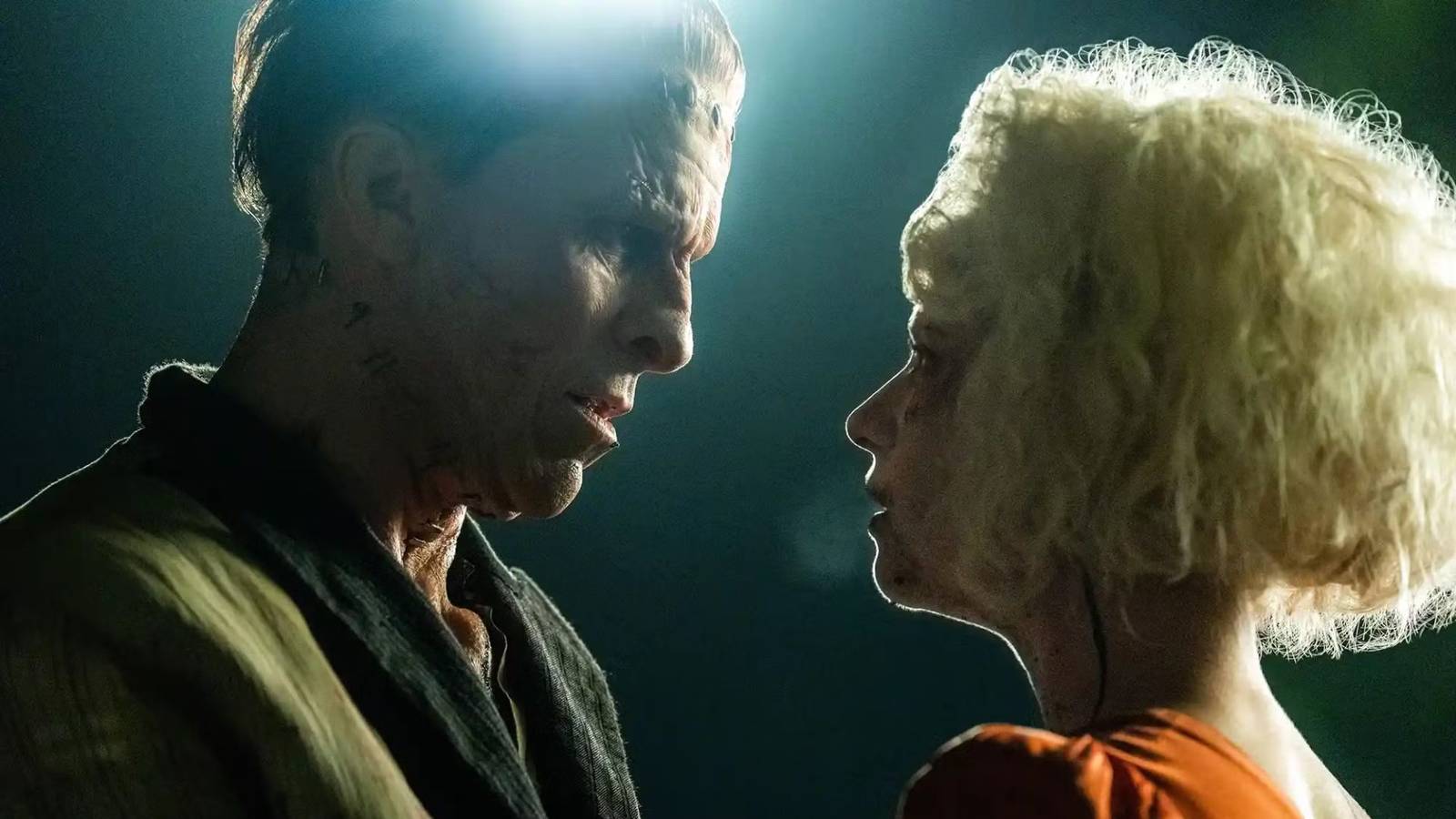
From the brilliant mind of director Maggie Gyllenhaal, The Bride! offers a breathtakingly fresh and fiercely feminist reinterpretation of Mary Shelley's classic Frankenstein narrative. This genre-bending film, praised for its unique blend of horror, arthouse sensibilities, and a poignant message, culminates in an ending that has left audiences captivated and contemplative. While overtly ambiguous, the final moments of The Bride! resonate with a powerful, albeit subtle, sense of hope and self-actualization. For those grappling with its complex conclusion, this article offers a comprehensive look at The Bride explained, dissecting its layers of meaning, from literal events to profound thematic undertones.
A Genre-Bending Journey: Understanding The Bride!'s Unique Vision
The Bride! isn't just a horror movie; it's a meticulously crafted homage to literary tradition, infused with modern commentary. It masterfully blends the gothic romance of Frankenstein with the anarchic spirit of Young Frankenstein, all while telling a deeply personal story about a woman's journey to reclaim her identity. At its core, the film is a perfectly executed message movie: a defiant assertion of a woman taking control of her life, even when societal forces conspire to box her into a predefined role.
The narrative begins with Frankenstein – now having inherited his father’s name and a century of solitude – seeking a companion. His desire leads him to the enigmatic Dr. Euphronious, who helps him resurrect a woman from a pauper’s grave. This 'Bride' is a remarkable blend of characters: Ida, the young escort whose body is reanimated; The Bride, a being seeking her own purpose; and, subtly, the furious spirit of Mary Shelley herself, embodied with masterful nuance by Jessie Buckley. Her performance is central to the film's impact, portraying a nascent consciousness evolving into fierce self-awareness.
What follows is not merely a tale of monsters, but a chaotic, Bonnie and Clyde-esque odyssey. The duo becomes wanted for murder after Frankenstein kills two men attempting to assault The Bride, and she, in a pivotal act of self-defense, kills a police officer. This series of events propels them into a desperate flight, forcing The Bride to confront her new existence and the choices it demands of her.
The Explosive Climax: Death, Rejection, and a Lingering Question
The film's climax is a brutal and visceral confrontation with mortality and the forces seeking to control The Bride. After their frenzied escape, Frankenstein, perhaps seeking to solidify their bond or to fulfill his own desire for conventional partnership, proposes marriage to The Bride. Her rejection, however, is met not with despair, but with an almost perverse pleasure on his part. This nuanced moment speaks volumes about their complex relationship: Frankenstein, in his own way, seems to appreciate her burgeoning autonomy, even if it defies his initial expectations.
Tragically, this brief interlude of understanding is shattered. The police, relentless in their pursuit, corner them. Frankenstein is gunned down in a hail of bullets, leaving The Bride alone and desperate. In a heart-wrenching scene that echoes her creator's initial act, she drives his lifeless body back to Dr. Euphronious, pleading for his resurrection. The doctor, however, declares it impossible. This moment reinforces The Bride's evolving emotional landscape, highlighting her capacity for grief and loyalty, even to a being who initially sought to possess her.
Before she can fully process this new loss, Detective Mallow, the tenacious officer who has been pursuing them, arrives. As Mallow observes, the police descend upon the house, and in a brutal display of relentless gunfire, The Bride too is murdered, collapsing beside Frankie. It appears to be a definitive, tragic end, with both monsters lying dead together.
The Ambiguous Aftermath: A Boom, Flashing Lights, and Intertwined Hands
Yet, The Bride! refuses to settle for such a straightforward conclusion. It is in the immediate aftermath of The Bride’s death that the film unleashes its most intriguing and debated twist. Detective Mallow, a character of quiet insight portrayed by Penélope Cruz, orders the police to clear the lab, allowing Dr. Euphronious and her maid Greta to prepare to answer questions. Mallow’s actions, however, are layered with an unspoken understanding. She seems to know, or at least suspect, that the story isn't quite over.
The camera holds on Mallow as she looks up at the house, a subtle shift in her expression betraying her intuition. Then, an auditory cue: a distinct "boom" echoes from within the lab. This is immediately followed by a visual anomaly: the lab's lights begin to flash erratically, suggesting a surge of power or an uncontrolled experiment. What transpired inside the lab, precisely, remains unseen – a deliberate narrative choice that fuels the film's enduring ambiguity. For more speculation on this pivotal moment, explore Did The Bride and Frankenstein Really Survive Their Explosive End?
The final shot is iconic: The Bride's hand stirs, then Frankie's. Slowly, deliberately, their hands reach out, intertwining in a powerful grasp as the credits roll. This single image is the crux of the hopeful ambiguity. Does it signify a literal reanimation, a miraculous second resurrection for both of them? Given the overwhelming police presence outside, a literal escape seems near impossible. Or is it something more profound?
The film doesn't provide a definitive answer, allowing viewers to interpret this final gesture. It could symbolize their spirits finding connection, a defiance of death through shared existence, or a new beginning entirely, perhaps even a metaphorical one where their essence persists. The ambiguity isn't a plot hole; it's the very point, inviting contemplation on survival beyond the physical, on the enduring power of connection and the will to exist.
Beyond Resurrection: The Metaphorical Heart of The Bride!'s Ending
To truly grasp the ending of The Bride!, one must look beyond the literal act of reanimation and delve into its profound metaphorical weight. The film's opening scene sets the stage for this deeper interpretation, with Jessie Buckley portraying Mary Shelley in a starkly lit address to the audience. Shelley speaks of untold truths, of stories she couldn't fully express in her novel or her life. This narrative thread suggests a possession, or at least a powerful channeling, of Shelley's spirit into Ida (The Bride).
From this perspective, The Bride's journey and her ultimate "resurrection" become a powerful metaphor for reclaiming one's narrative and voice. The hope in the ending, as director Maggie Gyllenhaal herself discussed, isn't necessarily about Frankenstein and The Bride living happily ever after. It's about a declaration of autonomy. It’s about The Bride finally revealing who she was always meant to be – not a creation for another's purpose, but an independent entity with her own desires, her own will, and her own story to tell. For a deeper dive into this aspect, read The Bride's True Message: Jessie Buckley as Mary Shelley Unveiled.
The grasping of hands at the very end can thus be seen as more than just a literal coming back to life. It's a symbolic embrace of shared destiny, of companionship found on one's own terms, and of a defiance against the societal and patriarchal forces that sought to control them both. Their "death" and ambiguous "rebirth" signify a shedding of old roles and a courageous step into an unknown future defined by their own choices, not by the expectations of others.
The film brilliantly posits that true life isn't just about breathing, but about the freedom to define one's existence, to speak one's truth, and to find connection on an equal footing. In this sense, The Bride achieves her most potent form of survival: not merely physical, but existential.
Ultimately, The Bride! leaves its audience with an indelible image of defiance and nascent hope. Its ending, while refusing a clear-cut resolution, offers something far more compelling: an invitation to ponder the nature of life, death, identity, and the enduring power of self-determination. This genre-defying masterpiece blends the macabre with the deeply human, creating a narrative that lingers long after the credits roll, allowing each viewer to interpret the hopeful, yet ambiguous, twist through their own lens.